The Three Layers of Heart Centered Journaling

The Power of Journal Writing: Getting to the Heart of You
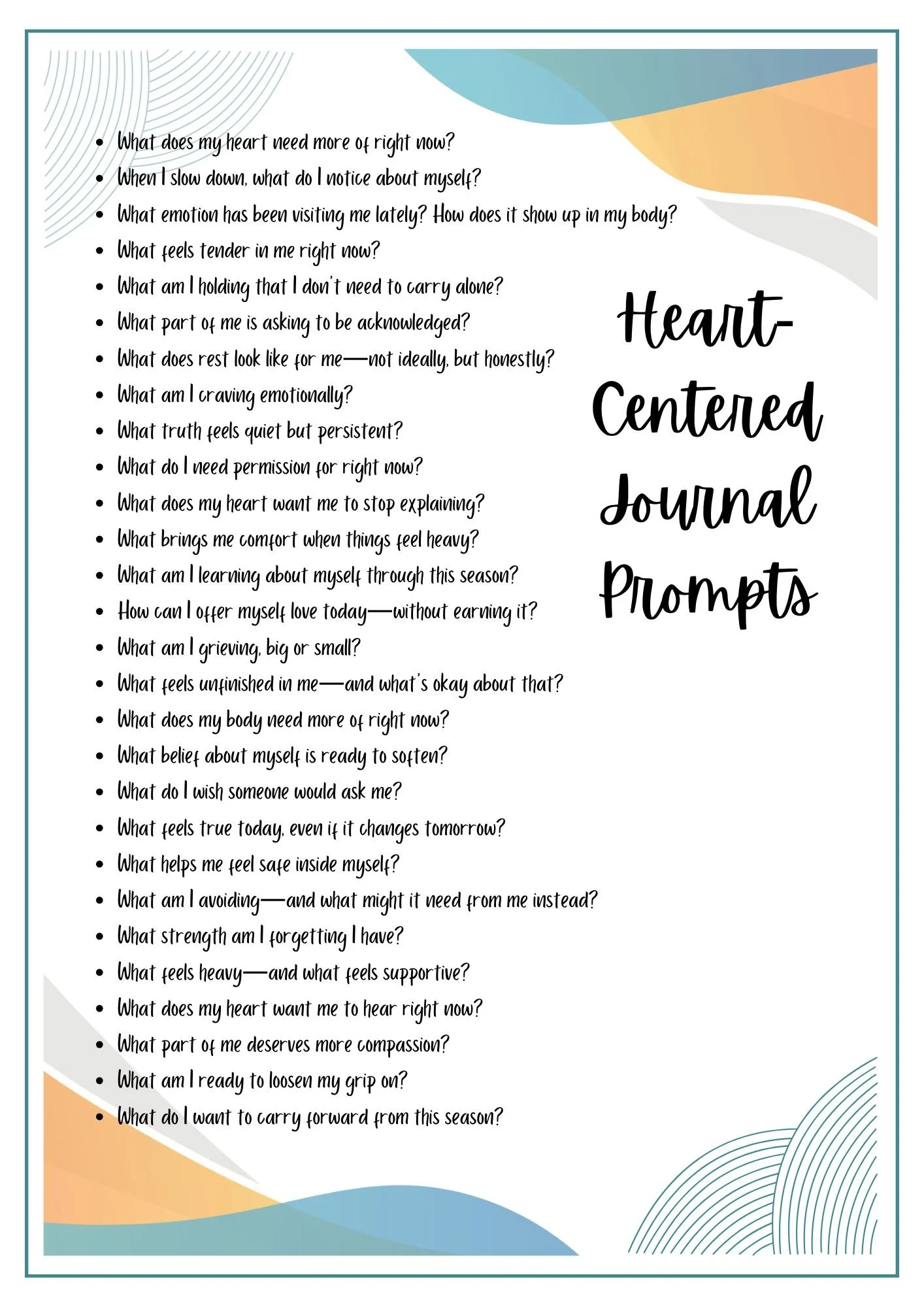
Prompts are below
Most of us sit down to write in our journals with good intentions. We want clarity. Relief. Understanding. And often, what comes out is a recap of the day, a list of problems, or a looping story we’ve already told ourselves a hundred times.
That kind of writing has its place. It helps us organize our thoughts and release some pressure.
But there is another way of writing—one that goes deeper.
One that doesn’t come from the head, but from the heart.
Writing Beyond the Surface
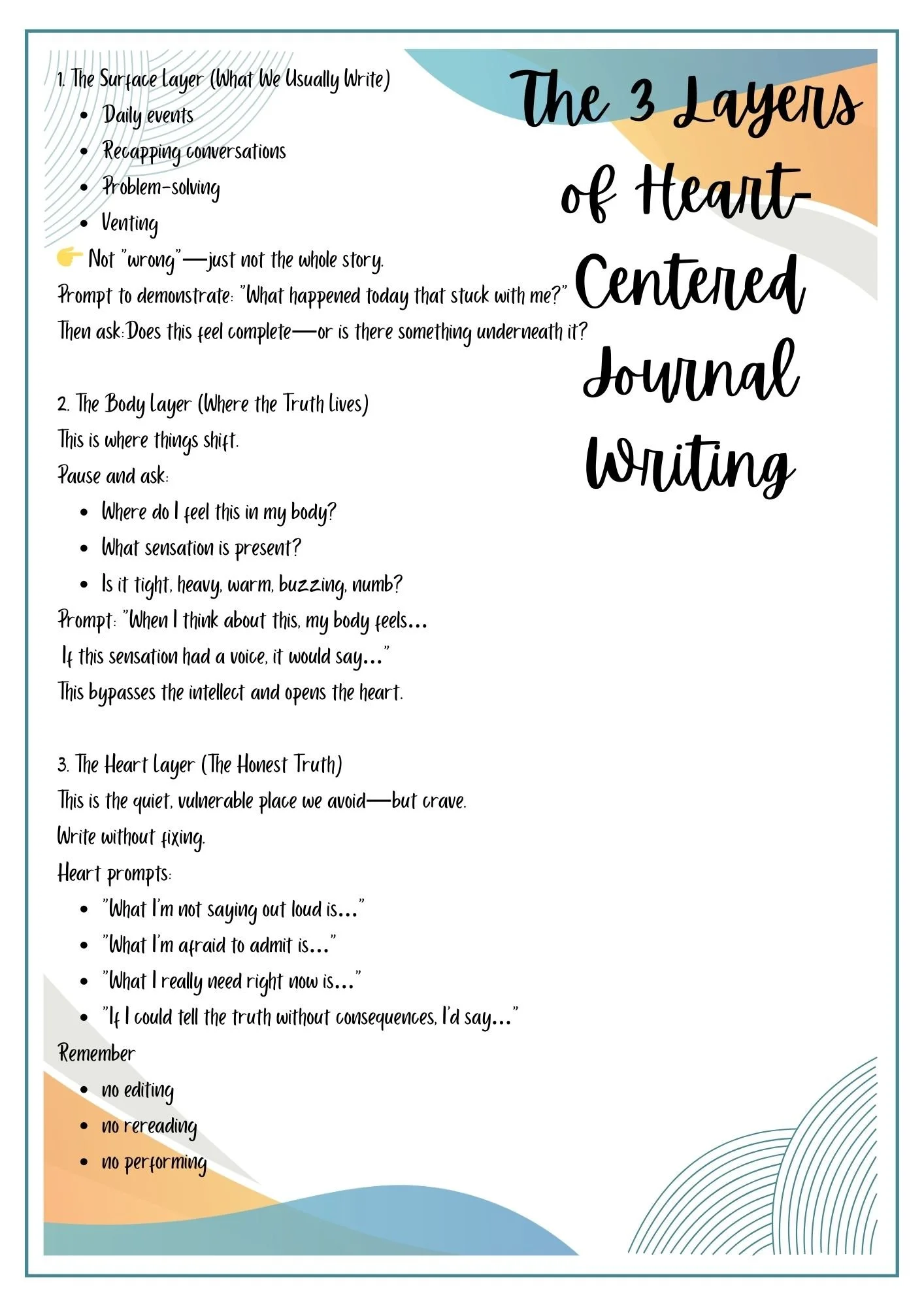
Surface-level journaling sounds like this:
This happened today.
They said this and it upset me.
I should feel grateful but I don’t.
I need to figure this out.
There is nothing wrong with writing this way. In fact, it’s often the doorway. But if we stop there, we miss the most meaningful part—the part of us that is quietly waiting to be heard.
Heart-centered journal writing asks a different question:
What is alive in me right now?
Not what happened.
Not what I think about it.
But what I feel in my body, my breath, my chest, my gut.
The Body Knows First
When we write from the heart, we slow down and listen.
Instead of rushing to explain or fix, we notice:
Where do I feel this emotion?
Is it tight, heavy, warm, buzzing, or numb?
What does this feeling want me to know?
You might write:
When I think about this, my chest feels heavy.
If this feeling had a voice, it would say…
This kind of writing bypasses logic and goes straight to truth. The body doesn’t argue. It doesn’t exaggerate. It simply tells you what’s real.
Letting the Honest Words Come Through
The heart doesn’t speak in polished paragraphs.
It speaks in fragments. In whispers. In sentences we don’t always want to admit.
Heart-centered prompts might sound like:
What I’m not saying out loud is…
What I’m afraid to admit is…
What I really need right now is…
If I could tell the truth without consequences, I’d say…
This is not about being dramatic or digging up pain for the sake of it. It’s about letting the truth move instead of staying trapped inside.
You Don’t Have to Fix Anything
One of the most important things to understand about this kind of writing is that it is not problem-solving.
You are not required to:
find an answer
make a decision
feel better
turn it into something positive
Your journal is a witness, not a judge.
Sometimes the most healing thing you can write is:
This is hard.
I don’t know what comes next.
I’m tired.
That is enough.
Writing Gently, Writing Safely
Heart-centered writing asks for tenderness. You are allowed to:
stop mid-sentence
close the journal when it feels like enough
place a hand on your heart or take a few deep breaths
end with a grounding thought or moment of gratitude
A beautiful way to close is:
What do I need after writing this?
Listening to that answer is part of the practice.
This Is Where the Power Lives
The power of journal writing isn’t in the habit itself—it’s in the honesty we bring to the page.
When we write from the heart:
we stop abandoning ourselves
we build trust with our inner voice
we create space for healing, clarity, and compassion
You don’t have to write every day.
You don’t have to write pages.
You simply have to be willing to listen.
The heart already knows what it wants to say.
The journal is just the place where it finally gets to speak.